
Can car parks be more environmentally friendly? How sustainable parking is shaping the future
When we think about becoming more environmentally friendly, car parks aren't always the first thing that springs to mind. However, with growing pressure on businesses to reduce their carbon footprint, improve sustainability and operate more responsibly, the parking industry has an important role to play.
Smarter parking technology, energy-efficient lighting, electric vehicle (EV) charging points, improved traffic management and sustainable infrastructure are just some features that enable a car park to be more environmentally friendly.
Whether you're a motorist looking for greener parking options or a car park operator exploring ways to make your site more sustainable, the future of parking is changing.
But what does environmentally friendly parking actually look like, and how can the industry make a difference?
Why does sustainability matter in the parking industry?
Car parks are an essential element of modern transport infrastructure. They support shopping centres, hospitals, retail parks, workplaces, airports, leisure facilities and town centres, helping millions of motorists access the places they need to visit.
However, traditional parking facilities can have environmental ramifications.
Large areas of hardstanding can contribute to surface water run-off, urban heat and reduced biodiversity. Poorly managed parking facilities can also result in unnecessary vehicle movements, congestion, wasted fuel and increased emissions.
For parking operators, sustainability is becoming an increasingly important consideration when planning, managing and maintaining facilities.
Motorists are also becoming more conscious of their environmental impact, with many looking for businesses and services that demonstrate a commitment to greener practices.
The good news is that improving car park sustainability doesn't necessarily mean completely redesigning an existing facility – often, smaller operational improvements and smarter investments can make a meaningful difference.
1. Introducing electric vehicle charging points
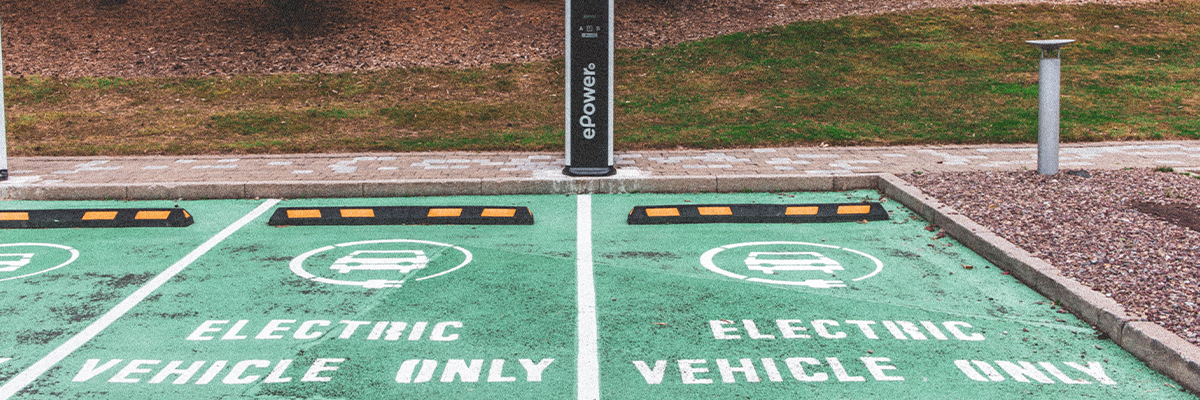
One of the most apparent changes in the parking industry is the growing demand for electric vehicle charging infrastructure.
As more motorists make the switch to electric and hybrid vehicles, accessible EV charging points are becoming an increasingly valuable feature of modern car parks.
For car park operators, installing electric vehicle charging stations can help future-proof facilities, attract environmentally conscious customers and improve the overall parking experience.
Providing EV charging facilities can also help businesses demonstrate their commitment to supporting the transition towards lower-emission transport.
As for motorists, having access to reliable electric car charging points makes it easier to combine everyday journeys with charging, particularly when visiting shopping centres, workplaces and leisure destinations.
However, installing EV chargers is only one part of the equation. Operators should also consider:
- The number of charging points required to meet customer demand
- Suitable locations that don't compromise accessible parking spaces or pedestrian routes
- Safe cable management to prevent trips and other health and safety risks
- Clear signage and lighting around EV charging facilities
- Regular inspections and maintenance of charging equipment
- Appropriate access control and monitoring to protect charging infrastructure
The Safer Parking Accessible EV scheme helps motorists identify car parks that prioritise both safety and security, while also providing accessible EV charging infrastructure. You can find all Safer Parking Accessible EV accredited facilities here.
2. Using smart parking technology to reduce emissions
Technology is transforming the way car parks operate, and smart parking solutions can play an important role in improving environmental performance.
One of the biggest sources of unnecessary emissions around parking facilities is the time motorists spend searching for an available space.
Drivers circling a car park, waiting in queues or travelling between different levels in search of a vacant bay all contribute to unnecessary fuel consumption and vehicle emissions. Fortunately, smart parking technology can help address this problem.
Solutions such as automatic number plate recognition (ANPR), occupancy management systems, real-time parking data and digital payment systems can improve the efficiency of parking operations.
For example, real-time occupancy monitoring can help operators understand how their facilities are being used, identify peak demand periods and make better-informed operational decisions.
Other benefits include:
- Reducing unnecessary vehicle movements within car parks
- Improving traffic flow and reducing congestion
- Helping motorists locate available parking spaces more efficiently
- Supporting more accurate occupancy management
- Reducing reliance on paper tickets and physical permits
- Improving operational efficiency through automated systems
For motorists, this means less time searching for parking and a smoother customer experience.
For operators, parking technology provides valuable data and analytics that can help improve site performance, manage capacity and support wider sustainability initiatives.
3. Installing energy-efficient car park lighting
Lighting is essential to the safety and security of any parking facility. However, traditional lighting systems can consume significant amounts of electricity, particularly across large multi-storey car parks and extensive outdoor parking areas.
Switching to energy-efficient LED car park lighting is one practical way operators can reduce energy consumption.
LED lighting offers several advantages:
- Lower electricity consumption compared with many traditional lighting systems
- Longer operational lifespans
- Reduced maintenance requirements
- Improved visibility across parking areas
- Greater opportunities for intelligent lighting control
Operators can also consider motion sensors and smart lighting systems that adjust illumination according to occupancy and activity levels.
However, reducing energy consumption should never come at the expense of safety.
Well-lit car parks help motorists and pedestrians navigate facilities, identify potential hazards and feel more confident when parking – particularly for women and girls, and particularly during darker evenings and early mornings.
A sustainable car park must still be a safe car park – energy-efficient lighting should therefore be incorporated into a wider site risk assessment, considering visibility, pedestrian safety, vehicle movements and security requirements.
4. Improving traffic management & reducing congestion
Effective traffic management is another important part of environmentally friendly parking.
Poorly designed layouts, unclear signage, inefficient entry and exit systems and inadequate occupancy management can all contribute to congestion.
When motorists spend unnecessary time queuing or driving around a car park, fuel consumption and emissions increase.
For parking operators, reviewing traffic flow and site layouts can help improve both environmental performance and customer experience.
Practical improvements include:
- Introducing clear directional signage
- Reviewing vehicle entry and exit points
- Improving parking bay layouts
- Using ANPR technology to streamline access
- Monitoring occupancy levels during busy periods
- Separating pedestrian routes from vehicle traffic
- Identifying congestion hotspots through site audits and operational data
Effective parking management can help motorists find spaces more quickly while reducing unnecessary vehicle movements.
5. Incorporating green infrastructure into car park design
Sustainable parking isn't just about technology and electricity consumption – the physical design of a car park can also have a significant environmental impact.
Traditional car parks often feature large areas of impermeable concrete or tarmac. These surfaces can increase surface water run-off and contribute to localised flooding, particularly during periods of heavy rainfall.
There are several ways operators and developers can make parking infrastructure more environmentally friendly.
Permeable paving
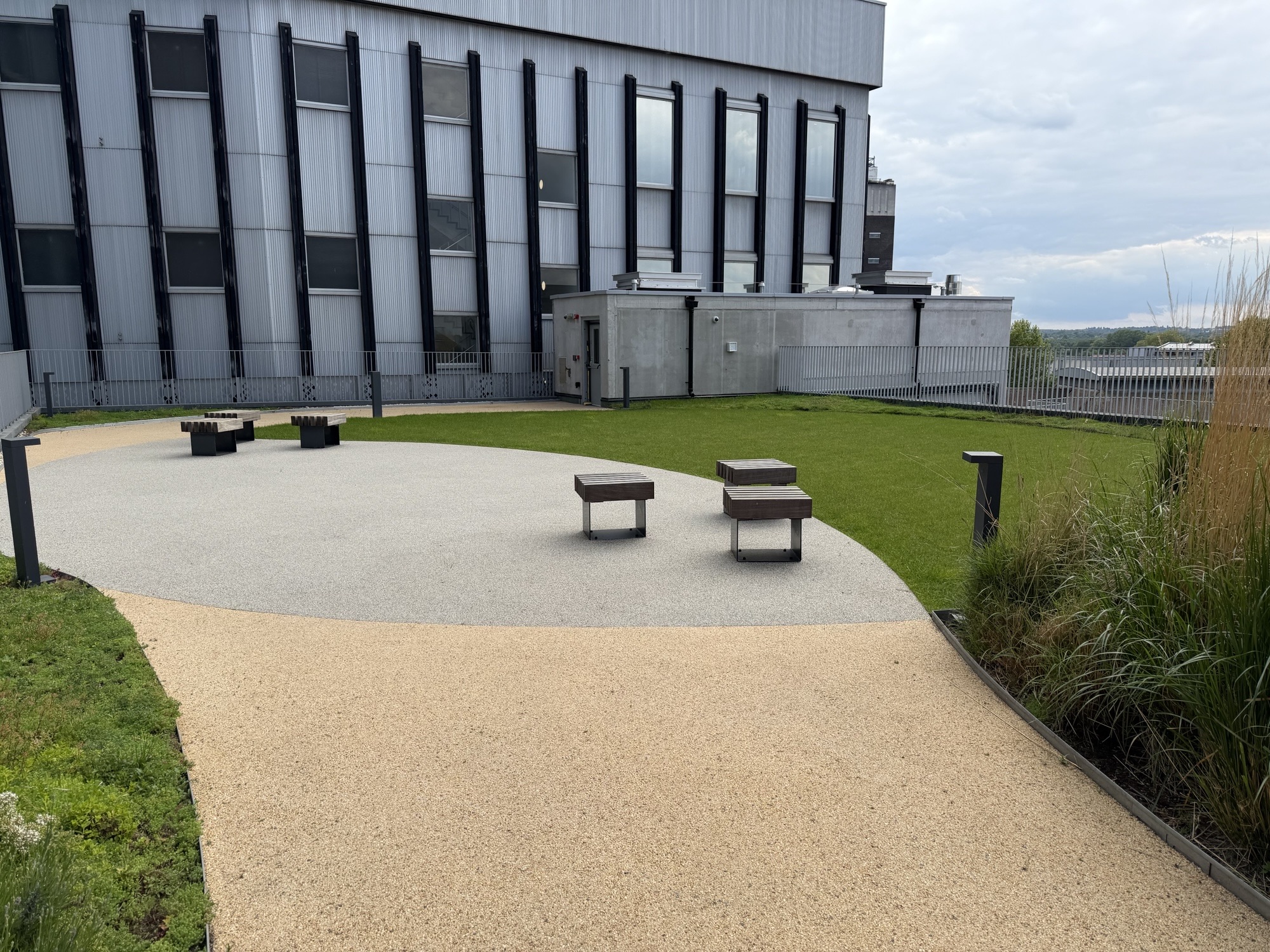
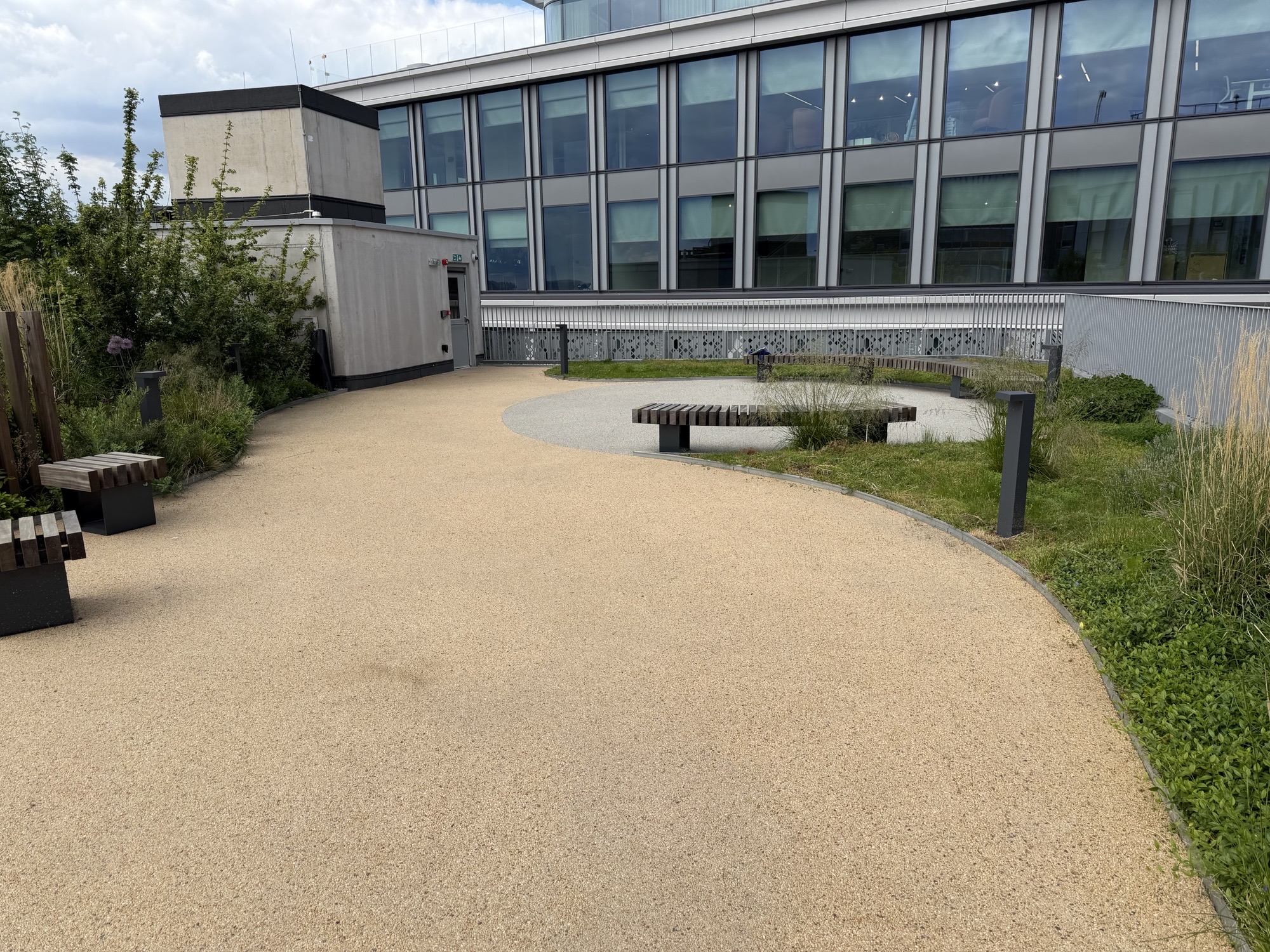
Permeable parking surfaces allow rainwater to drain through the material, helping reduce surface water run-off and supporting more sustainable drainage.
Green spaces & landscaping
Adding trees, planted areas and green spaces can improve biodiversity, provide natural shade and help reduce the urban heat island effect.
Sustainable drainage systems (SuDS)
Sustainable drainage solutions, including rain gardens, swales and attenuation features, can help manage rainfall more effectively and reduce pressure on drainage systems.
Solar car park canopies
Solar panels installed above parking bays can generate renewable electricity while providing shade and weather protection for parked vehicles.
Green roofs
Where suitable, green roofs on multi-storey car parks can provide additional environmental benefits, support biodiversity and improve the overall appearance of parking facilities.
A real-world example
A great example of how sustainability and effective car park management can work together can be seen at the Marks & Spencer multi-storey car park at Cheshire Oaks.
The facility demonstrates how thoughtful car park design can incorporate environmentally friendly features without compromising safety, security or customer experience.
Opened in 2012, the multi-storey car park includes an impressive 300m² vertical green living wall, designed to help absorb vehicle emissions, reduce carbon and support local biodiversity. It also incorporates sustainable surface materials to help manage rainwater, landscaped areas that contribute to the site's environmental credentials and Pod Point electric vehicle charging stations to support lower-carbon transport.
This is a great example of how car park operators can look beyond traditional parking provision and invest in facilities that benefit motorists, businesses and the environment.

6. Making car park operations more sustainable
Environmental responsibility doesn't stop with the physical design of a parking facility – the way a car park is managed on a daily basis also matters.
Car park operators can introduce a range of operational changes to reduce waste, improve efficiency and minimise their environmental footprint.
For example:
- Moving towards digital parking permits and paperless payment systems
- Using electronic reporting and digital site inspection tools
- Monitoring energy consumption across facilities
- Reducing unnecessary vehicle movements through effective patrol planning
- Reviewing waste management and recycling arrangements
- Using data analytics to identify opportunities for operational improvements
Importantly, sustainable operations should never compromise security or service standards. Security patrols, CCTV monitoring, site inspections, risk assessments and regular maintenance remain essential to delivering a safe and well-managed parking environment.
The challenge is to find smarter ways of delivering these services while reducing unnecessary resource consumption.
7. Can sustainability & car park security work together?
Absolutely. In fact, environmental sustainability and effective car park security often complement one another.
Modern parking facilities need to balance several priorities, including environmental performance, crime prevention, customer confidence and operational efficiency.
For example, upgrading to LED lighting can reduce energy consumption while maintaining the visibility needed for CCTV surveillance and pedestrian safety.
Similarly, ANPR systems and access control technology can help streamline vehicle movements while supporting security monitoring and reducing the need for certain manual processes.
Digital site audits and remote monitoring can also help operators identify maintenance issues, potential hazards and operational inefficiencies more quickly.
However, every car park is different. Operators should consider the individual characteristics of their site when introducing new technology or sustainability measures.
A comprehensive site assessment can help identify opportunities to improve:
- Energy efficiency
- Lighting and visibility
- CCTV coverage and surveillance
- Access control systems.
- Vehicle and pedestrian safety
- Health and safety compliance
- Waste management
- Overall operational efficiency
The most successful sustainable parking strategies take a holistic approach, ensuring that environmental improvements support rather than undermine the safety of motorists.

8. What can motorists do to make parking more environmentally friendly?
Sustainability isn't solely the responsibility of car park operators – motorists can also make small changes that contribute to greener parking habits.
If you're looking to reduce the environmental impact of your journeys, consider the following:
- Choose parking facilities with EV charging: if you drive an electric vehicle, look for car parks that provide accessible and reliable charging infrastructure
- Avoid unnecessary driving around car parks: follow directional signage and use available parking information to locate a space more efficiently
- Switch off your engine when stationary: avoid leaving your vehicle idling unnecessarily while waiting for passengers or a parking space
- Support businesses investing in sustainability: choosing facilities that demonstrate a commitment to energy efficiency, EV infrastructure and responsible parking management can help encourage further investment across the industry
Small changes can make a difference when adopted by large numbers of motorists.
9. The future of sustainable parking
The parking industry is evolving, and sustainability is likely to become an increasingly important part of future parking strategies.
As technology advances and environmental expectations change, operators will have more opportunities to improve the way parking facilities are designed, managed and maintained.
Some of the developments shaping the future of sustainable parking include:
- Smart parking systems: greater use of real-time occupancy data, automated access control and intelligent parking management
- Electric vehicle infrastructure: more widespread EV charging facilities and improved charging management
- Renewable energy: increased use of solar canopies and renewable electricity across parking facilities
- Predictive maintenance: using data to identify potential equipment issues before they become costly problems
- Sustainable construction: greater consideration of recycled materials, permeable surfaces and low-impact construction methods
- Digital customer experiences: more paperless payments, digital permits and automated parking processes
The future of parking will be about creating efficient, secure, accessible and environmentally responsible facilities that meet the changing needs of motorists, businesses and communities.
How can Safer Parking support a more sustainable parking industry?
At Safer Parking, we understand that effective parking management involves much more than managing spaces and monitoring vehicles.
A well-managed car park should provide a positive experience for motorists while supporting the operational, safety and security requirements of the business responsible for the facility.
For car park operators looking to demonstrate their commitment to providing safer parking facilities, achieving police-backed accreditation is another important step. The Safer Parking team can help operators understand the benefits of recognised parking accreditation and how it can support improvements in safety, security and the overall customer experience.
Conclusion
The answer is yes – there are many ways the parking industry can reduce its environmental impact.
For operators, investing in sustainable parking infrastructure and more efficient operational processes can help future-proof facilities, improve customer experience and support wider environmental objectives.
For motorists, choosing greener parking options and adopting more responsible driving and parking habits can also contribute to positive change.
Looking to improve the safety, efficiency and management of your parking facility? Get in touch with the Safer Parking team to discover how a proactive approach to parking management can help support your site and its users.