
The ultimate guide to airport parking
Planning a trip involves more than booking flights, packing your suitcase and checking your passport. If you're driving to the airport, arranging your parking in advance is another important part of preparing for a smooth, stress-free journey.
With different parking options available, from short-stay and long-stay car parks to meet-and-greet services, knowing what to look for can help you make the right choice for your needs, budget and peace of mind.
But airport parking isn't just about convenience and price – security, accessibility, and the overall quality of the parking facilities all play an important role in your travel experience.
In this guide, we explore the key things to consider before booking airport parking, helping you prepare for your trip with confidence.
1. Choose the right type of airport parking
Before making a reservation, consider how long you'll be away, how many people are travelling with you and how you plan to get to the terminal.
Different parking options offer different benefits, so it's worth comparing what's available at your chosen airport.
Short-stay parking
Ideal for dropping off or collecting passengers, or for shorter trips where proximity to the terminal is a priority.
Long-stay parking
Often a practical option for holidays and longer business trips, with parking facilities designed for extended stays.
Meet-and-greet parking
Allows you to drop your vehicle off at a designated location, where a service provider takes care of parking it for you. This can be particularly convenient if you're travelling with children, carrying lots of luggage or working to a tight schedule.
Off-site parking
Parking facilities located away from the airport, which may offer competitive prices and a transfer service to the terminal.
When comparing options, look beyond the headline price. Consider transfer times, operating hours, accessibility, cancellation policies and whether the service suits your departure and arrival times.
A little research before booking can help you avoid unnecessary delays and unexpected costs on travel day.
2. Make security a priority
Leaving your vehicle at an airport car park for several days or weeks means trusting the facility to help protect it while you're away.
Although no parking facility can guarantee complete protection against every incident, effective security measures can help reduce risks and provide greater peace of mind.
Before booking, check whether the following security arrangements are in place:
- CCTV and surveillance – camera systems can support monitoring, incident investigation and the overall management of a parking facility
- Security patrols – regular patrols can help identify suspicious activity and support a visible security presence
- Access control systems – barriers, controlled entry points and appropriate access procedures can help restrict unauthorised access
- Lighting and visibility – well-lit parking areas, entrances, exits and pedestrian routes can improve visibility and help people move around the site more safely
- Secure vehicle storage – understanding where your vehicle will be kept and what procedures govern access to it is particularly important when using meet-and-greet services
It's also worth checking whether the car park explains its security arrangements clearly and provides contact details for assistance.
For parking operators, security is an ongoing responsibility rather than a one-off installation. Equipment, procedures and site conditions need to be reviewed and maintained to remain effective.
At Safer Parking, safety and security are central to understanding what makes a parking environment well managed. Taking the time to consider these factors before travelling can help you make a more informed decision about where to leave your vehicle.
3. Check the location & transfer arrangements
Getting from your car park to the terminal should be straightforward – particularly when you're travelling early in the morning, late at night or with children and luggage.
Before confirming your booking, establish exactly where the car park is located and how you'll reach the airport terminal.
Check whether the facility offers a shuttle bus, a walking route or another transfer arrangement. If a shuttle is provided, look into its operating hours, expected frequency, journey time and any additional charges.
It's particularly important to check transfer arrangements if your flight departs outside normal daytime hours. A service that operates frequently during the day may have a different schedule overnight.
If you're using an off-site car park, allow extra time for parking, unloading luggage, waiting for transport and travelling to the terminal.
For meet-and-greet services, confirm the exact vehicle drop-off point and the procedure for handing over your keys. Avoid relying on vague instructions or assuming that you can leave your vehicle wherever is most convenient.
Before you travel, check your booking confirmation carefully and make sure you know where to go, who you should meet and how to contact the provider if you need assistance.
Top tip: Save the car park's address, booking confirmation and arrival instructions on your phone before leaving home. Having these details readily available can make your journey easier if mobile reception is unreliable.

4. Compare prices & read the booking terms
Airport parking prices can vary depending on the location, duration of your stay, time of year and type of service you choose.
Booking ahead may give you access to a wider choice of spaces and prices, particularly during busy holiday periods. However, it's important to understand exactly what you're paying for.
When comparing quotes, check for:
- Additional fees for shuttle transfers or other services
- Charges for arriving earlier or later than your booked time
- Procedures and costs for extending your stay if your return flight is delayed
- Cancellation and amendment policies
- Any restrictions on vehicle size, height or type
- Whether the advertised price covers the full duration of your trip
- Any additional terms relating to key handover, vehicle collection or storage
Don't assume that the cheapest option offers the best overall value. A slightly more expensive car park may provide more convenient transfers, clearer booking terms or security features that better meet your needs.
Ensure to read customer reviews where available, paying attention to recurring comments about service reliability, communication, vehicle handling and the arrival and collection process.
Understanding the terms and the service you're booking can help prevent surprises when you return from your trip.
5. Look beyond the car park's appearance
A well-presented parking facility can make a positive first impression, but good parking management involves much more than clean surfaces and clearly painted bays.
Health and safety, site maintenance and effective operational procedures all contribute to the experience of using a car park.
When assessing a facility, consider whether parking bays, driving lanes and pedestrian routes are clearly marked. Look for visible signage, clearly identified entrances and exits, and safe routes between parking areas and transfer points.
Good vehicle and pedestrian management is particularly important in busy airport environments, where people may be unfamiliar with the layout and distracted by luggage or departure times.
From an operational perspective, regular site inspections and audits can help identify issues such as damaged surfaces, obstructed walkways, inadequate lighting and worn markings. Addressing these issues promptly helps support a safer and more efficient environment.
For parking operators, appropriate risk assessments, maintenance schedules and health and safety procedures are essential parts of responsible site management.
For travellers, choosing a facility that communicates its procedures clearly and appears well maintained is a useful starting point when comparing options.
6. Understand the role of parking technology
Technology is playing an increasingly important role in how airport parking facilities operate.
From online reservations to automatic number plate recognition (ANPR), digital systems can help streamline the customer journey and support more efficient site management.
Depending on the facility, you may encounter:
- Online booking systems – allows you to reserve a space in advance and keep your booking details accessible
- Automatic number plate recognition – can help identify vehicles entering and leaving a car park, supporting entry and exit processes
- Digital payment systems – may reduce the need for manual transactions at barriers or payment machines
- Occupancy management tools – help operators monitor space availability and manage demand
- Integrated surveillance systems – can support security monitoring and the review of incidents
For customers, these technologies can mean fewer delays, clearer booking arrangements and a more convenient parking experience.
However, technology works best when supported by effective operating procedures, appropriate maintenance and trained staff. A digital system alone cannot replace sound security practices or good customer service.
As the parking industry continues to evolve, the focus remains on making facilities safer, more efficient and easier to use.
7. Prepare your vehicle before you leave
Once your parking is booked, take a few simple steps to prepare your vehicle for its time away.
Start by checking that your car is in suitable condition for the journey to the airport. Make sure you have enough fuel or battery charge, check tyre condition and ensure any essential maintenance has been completed.
Before leaving the vehicle in the car park:
- Remove valuables and avoid leaving bags, electronics or other desirable items on display
- Check that all windows are closed and the vehicle is locked
- Take your parking ticket or booking confirmation with you
- Make a note of your parking bay, level or zone, and take a photograph of any useful location signage
- Check whether the car park has specific instructions about keys, electric vehicles or other vehicle requirements
If you're using a meet-and-greet service, establish whether you need to leave your keys and understand how the vehicle will be handled and stored.
For electric vehicle owners, check whether charging facilities are available and whether you need to reserve a charging space separately. Don't assume that a standard parking booking automatically includes charging.
These small preparations, combined with a clear understanding of the provider's procedures, can help make collecting your vehicle easier when you return.
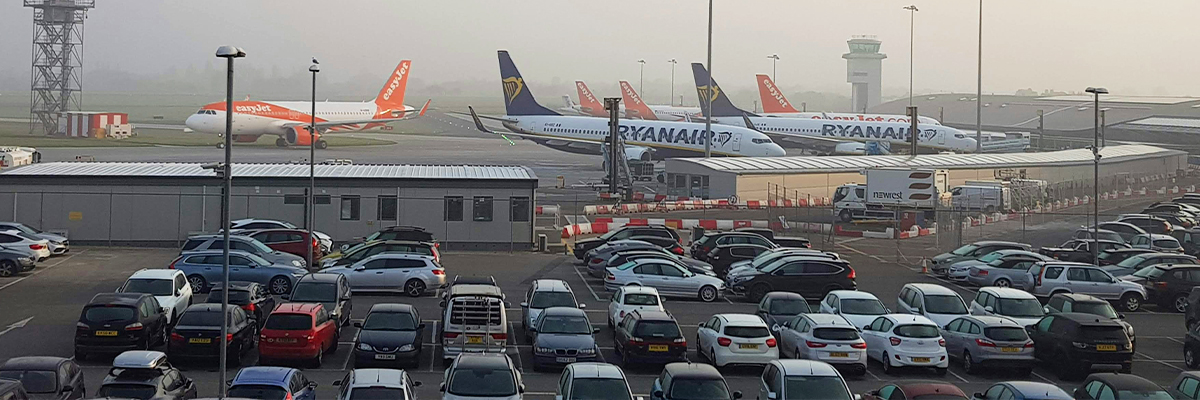
8. Allow enough time on travel day
Even with a confirmed parking reservation, it's worth building some flexibility into your travel plans.
Traffic congestion, roadworks, busy terminal approaches and queues at car park entrances can all affect your arrival time. During school holidays and other peak travel periods, demand may also place additional pressure on parking and transfer services.
Before setting off, check your route and allow enough time to park, unload your luggage, complete any required check-in procedures and reach the terminal.
Follow the arrival instructions supplied by your parking provider rather than relying solely on your satellite navigation. Some airport parking services use designated entrances or drop-off points that differ from the main airport approach.
If your flight is delayed or your plans change, keep your booking details handy and contact the parking provider if necessary.
A little extra preparation can reduce last-minute stress and help you begin your journey on the right foot.
9. Know what to expect when you return
It's easy to focus entirely on departure day, but the collection process is just as important when choosing airport parking.
Before booking, find out how you'll retrieve your vehicle and whether any additional steps are required.
For self-park facilities, check whether your parking ticket or booking reference is needed to exit and whether payment is handled in advance or on departure.
For meet-and-greet services, confirm how to notify the provider of your arrival, where your vehicle will be returned and what happens if your flight is delayed.
It's also sensible to understand the procedure for reporting a problem or raising a concern. Keep your booking confirmation and any relevant contact information until your vehicle has been collected and your journey home is complete.
Clear collection arrangements and accessible customer support can make a significant difference after a long flight.
10. Consider the wider impact of your parking choice
Convenience, security and price are important, but other considerations can also influence your choice of airport parking.
Some parking operators are exploring sustainability initiatives, including energy-efficient lighting, electric vehicle charging and more efficient management of parking spaces.
Technology that improves occupancy management can also help operators make better use of available capacity and understand customer demand.
If sustainability matters to you, look for information about the facility's environmental initiatives and available transport options. For example, a well-coordinated shuttle service may help reduce the need for multiple individual car journeys between off-site parking and the terminal, depending on how the service operates.
As customer expectations evolve, effective parking management means looking beyond the individual parking space to the wider experience and impact of the service.
Your airport parking checklist before you travel
Before setting off, use this quick checklist to make sure you've covered the essentials:
- Compare parking options and choose a service that suits your trip
- Confirm your booking dates, times and total price
- Read the cancellation, amendment and late-return policies
- Check the car park's location, access instructions and transfer arrangements
- Review the available security measures and customer reviews
- Confirm the designated vehicle drop-off and collection points
- Understand how your vehicle will be handled, stored and returned
- Save your booking confirmation and the provider's contact detail
- Prepare your vehicle and remove valuables
- Allow enough time for traffic, parking and the transfer to the terminal
- Understand the vehicle collection process for your return journey
Taking a few minutes to work through these points can help you avoid common problems and travel with greater confidence.
Conclusion
Airport parking is an important part of the overall travel experience – the right choice can help you save time, manage costs and enjoy greater peace of mind while you're away.
By considering security measures, site management, location, pricing, technology and customer service before booking, you can make a more informed decision about where to leave your vehicle.
For parking operators, these same factors highlight the importance of maintaining safe, well-managed facilities that meet customer expectations and support efficient day-to-day operations.
At Safer Parking, we recognise the importance of safety, security and effective parking management in creating better parking environments. Whether you're planning a short business trip or a longer family holiday, taking the time to consider your parking arrangements before you travel is a simple step towards a smoother journey.
Plan ahead, choose carefully and make parking one less thing to worry about before you fly.