
How to reduce anti-social behaviour in car parks
Car parks play an important role in keeping businesses, residential developments and public spaces accessible. However, when anti-social behaviour becomes a recurring issue, it can affect more than the parking experience – as vandalism, loitering, noise, littering and intimidating behaviour can all contribute to an unsafe environment.
For businesses, managing these issues is about more than responding to incidents as they happen. A proactive approach to car park safety and security can help deter unwanted behaviour before it happens, thus improving the customer experience and creating an environment where people feel confident leaving their vehicles.
So, how can car park owners and operators reduce anti-social behaviour effectively? From improving lighting and investing in CCTV to carrying out regular site audits, several practical measures can make a meaningful difference.
1. Improve lighting & visibility
Poor lighting and hidden corners can make car parks feel unsafe, particularly during the evening, overnight or in the winter months. Areas with limited visibility may also provide opportunities for vandalism and vehicle interference.
That’s why improving lighting is one of the simplest ways to support a safer parking environment.
Car park operators should assess whether lighting is consistent across the site, paying particular attention to entrances, exits, pedestrian walkways, stairwells, payment machines and less frequently used parking areas. Lighting should also be checked regularly to identify faulty or damaged fixtures.
Alongside lighting, clear sightlines can help reduce opportunities for anti-social behaviour. Overgrown vegetation, poorly positioned structures and unnecessary obstructions can create concealed areas that are difficult for security teams to monitor.
By prioritising visibility, operators can make it easier for customers to navigate the site and for security personnel to identify potential issues.
2. Invest in CCTV & surveillance
CCTV can play an important role in deterring anti-social behaviour and supporting the investigation of incidents when they occur.
Visible cameras may discourage individuals from engaging in vandalism, vehicle damage or other unwanted activities. Where incidents do take place, suitable footage can help establish what happened and provide useful evidence.
However, simply installing cameras isn’t enough – an effective CCTV system should be designed around the specific risks and layout of the car park.
Operators should consider:
- Strategic camera placement: Cover entrances, exits, pedestrian routes, payment areas and locations identified as higher risk
- Image quality: Ensure footage is suitable for its intended purpose, including identifying relevant activity where appropriate
- Regular maintenance: Check that cameras are operational, correctly positioned and free from obstructions
- Monitoring arrangements: Establish who is responsible for reviewing footage, responding to alerts and escalating incidents
- Data protection: Ensure CCTV is used lawfully, with appropriate signage, access controls and retention arrangements
CCTV is most effective when it forms part of a wider security strategy rather than being treated as a standalone solution. Combining surveillance with good lighting, clear procedures and regular site inspections can provide a more robust approach to car park security.

3. Introduce professional security patrols
Technology can help identify potential problems, but a visible human presence oftentimes makes a significant difference.
Professional security patrols provide an active deterrent to anti-social behaviour, while giving customers greater reassurance. Regular patrols can help identify suspicious activity, discourage loitering and raise emerging maintenance or safety concerns before they escalate.
The effectiveness of patrols depends on how they’re planned and delivered. Rather than relying solely on predictable routes, operators should consider the specific characteristics of their car park, including its busiest periods, previous incidents and areas that may require additional attention.
A structured patrol strategy can include:
- Regular checks of entrances, exits and pedestrian areas
- Additional visits during periods when anti-social behaviour is more likely to occur
- Inspections of lighting, signage and access points
- Prompt reporting of suspicious activity, damage and safety hazards
- Clear escalation procedures for incidents requiring police or emergency service involvement
Security personnel should also understand how to engage with members of the public professionally and safely – especially women and girls who may feel unsafe. Their role is not simply to challenge unwanted behaviour, but to help maintain a secure, welcoming and well-managed environment.
4. Strengthen access control & site management
Unrestricted access can sometimes make car parks vulnerable to misuse.
Access control systems can help operators manage who enters and exits a site, depending on the car park's purpose and operational requirements.
Possible measures include automatic barriers, controlled entry systems, permit arrangements, visitor registration and clear parking terms. These systems can make unauthorised access more difficult while helping operators maintain better oversight of site activity.
However, access controls need to be proportionate and practical. Poorly designed systems can create congestion, frustrate legitimate users or introduce safety risks if emergency access is not properly considered.
Operators should therefore assess the needs of the site before introducing new measures. For some locations, improved signage and clearer parking rules may be sufficient. Others may benefit from more advanced access control supported by CCTV and security patrols.
5. Use clear signage to set expectations
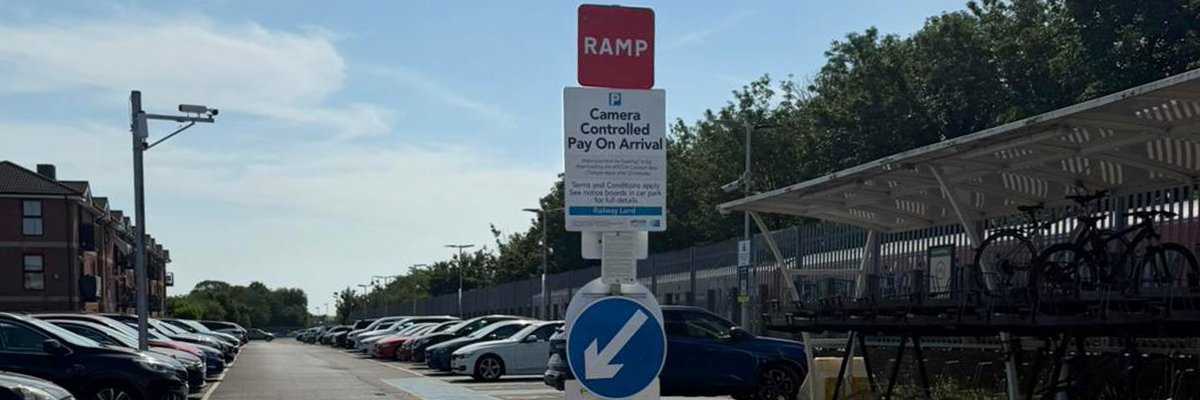
Clear, well-positioned signage helps establish how a car park should be used and what users can expect when they arrive.
Signs can communicate parking restrictions, opening hours, pedestrian safety requirements, site rules and the availability of CCTV or security patrols. They can also explain how customers should report suspicious activity or seek assistance.
When expectations are clearly communicated, operators can reduce confusion and make it easier to identify and address breaches of site rules.
For signage to be effective, it should be easy to read, consistently positioned and maintained in good condition. Information should be concise, accessible and relevant to the people using the site.
It’s also important to ensure that any statements about surveillance, enforcement or security arrangements accurately reflect the measures in place. Clear communication helps build trust and reassures customers that the site is being managed responsibly.
6. Carry out regular site audits & risk assessments
Anti-social behaviour isn’t always caused by a single issue – it can be influenced by a combination of environmental conditions, poor maintenance, inadequate supervision and weaknesses in site management.
Regular site audits and risk assessments help operators identify these vulnerabilities and prioritise improvements.
A thorough review should consider both physical security and the experience of people using the car park. This may include examining lighting levels, camera coverage, access points, pedestrian routes, signage, visibility and the condition of the surrounding environment.
Incident records can also provide valuable insight. If vandalism repeatedly occurs in one area or complaints increase during particular periods, these patterns may indicate where additional controls are needed.
Following an audit, operators should develop an action plan that identifies priorities, responsibilities and timescales. Improvements should then be reviewed to establish whether they are having the intended effect.
Regular assessments are particularly important when a site changes, nearby developments alter footfall or new patterns of anti-social behaviour emerge.
A well-maintained car park sends a clear message that the site is actively managed. Promptly repairing damage, removing graffiti, clearing litter and addressing broken lighting can help prevent minor issues from becoming persistent problems.
7. Make reporting easy & encourage community awareness
Car park users are often among the first to notice suspicious activity, damaged equipment or emerging safety concerns – making it easy for them to report issues can help operators respond more quickly.
Visible contact information, clearly displayed reporting procedures and accessible customer support channels can encourage people to raise concerns before they develop into more serious incidents.
Operators should establish a consistent process for recording reports, assessing their seriousness and deciding what action is required. This helps ensure that concerns are not overlooked and that recurring issues can be identified.
Where appropriate, collaboration with neighbouring businesses, property managers, local authorities and the police can also support a more coordinated approach.
For example, if several nearby businesses report similar problems involving vandalism or unauthorised gatherings, sharing relevant information through appropriate channels may help identify patterns and inform preventative measures.
Community engagement should always be handled responsibly, with due regard for privacy and the safety of those reporting incidents. Members of the public should never be encouraged to confront potentially dangerous individuals themselves.
Instead, they should be given clear guidance on how to report concerns and when to contact the police or emergency services.
8. Use parking technology to support better decision-making
Modern parking technology can provide operators with greater visibility over how their facilities are being used, helping them make more informed security and operational decisions.
Depending on the site, useful tools may include automated number plate recognition (ANPR), access control systems, occupancy monitoring and digital incident reporting.
These technologies can support a better understanding of site activity and help operators identify unusual patterns that may warrant further investigation.
For example, occupancy data may highlight periods of unexpected activity, while digital reporting systems can help reveal recurring problems across particular areas or times of day. ANPR can support vehicle access management where appropriate, although it should not be treated as a standalone method of preventing anti-social behaviour.
The value of technology lies in how effectively it supports day-to-day management. Systems should be selected according to the risks, size and operational requirements of the car park, rather than introduced simply because they’re available.
Operators should also consider data protection obligations, system maintenance, staff training and how information will be used.
By combining reliable technology with experienced personnel and consistent procedures, car park operators can move towards a more proactive and evidence-led approach to security.
9. Measure results & adapt your approach
Reducing anti-social behaviour requires ongoing attention. Measures that work well for one site may not be sufficient for another, and changing patterns of use can introduce new challenges over time.
Monitoring performance helps operators understand whether their security measures are delivering meaningful improvements.
Useful indicators may include:
- The number and type of reported incidents
- Repeat incidents in specific locations
- Reports of vandalism, vehicle damage or unauthorised access
- Response times and the completion of follow-up actions
- Customer feedback relating to safety and security
- The number of outstanding maintenance or site audit issues
These measures should be considered together rather than in isolation. For example, an increase in reports may reflect improved reporting procedures rather than a genuine rise in incidents. Equally, a reduction in reported incidents does not necessarily mean that all underlying problems have been resolved.
Reviewing the evidence regularly enables operators to adjust patrol schedules, improve infrastructure and allocate resources where they are most needed.
A cycle of assessment, action and review helps ensure that car park security remains responsive to the needs of the site and its users.
A joined-up approach to car park security
No single measure can eliminate anti-social behaviour entirely. CCTV may help deter and investigate incidents, while lighting improves visibility and security patrols provide a visible presence. Access controls, clear signage and regular site audits can strengthen these measures further.
The greatest benefit comes from bringing these elements together in a coordinated security strategy.
This means understanding the specific risks associated with a site, investing in appropriate preventative measures and ensuring that security arrangements are reviewed regularly.
It also means recognising that a well-managed car park is about more than preventing crime. Clean, accessible and properly maintained facilities help create a better experience for customers, employees, residents and visitors alike.
Conclusion
At Safer Parking, we understand the importance of creating parking environments that are safe and well-managed. Safer Parking accredited car parks must pass a rigorous police risk assessment that demonstrates a facility’s commitment to security and safety for users as well as staff.
Whether you’re responsible for a commercial car park, a residential development or a public-facing parking facility, taking a proactive approach to security can help protect your site and support a better customer experience.
Looking to improve safety and reduce anti-social behaviour in your car park? Join over 4,500 car parks by achieving Safer Parking accreditation – contact the team today.